Best Performance Management Tools for Voice Notes As Feedback in 2026
You need a performance review tool that lets managers leave voice notes instead of typing paragraphs, but most platforms still treat audio as an afterthought. Your team's feedback quality depends on how naturally managers can deliver it, so the recording experience matters as much as the analytics behind it.
By the end of this article, you'll know exactly which criteria separate useful voice note features from gimmicks, how three leading tools compare on recording quality, transcription accuracy, and integration depth, and which platform earns the top spot for 2026.
What to Look For in Voice Note Feedback Tools
When evaluating voice note feedback tools for 2026, prioritize features that streamline asynchronous communication, such as AI-powered transcription and sentiment analysis, to ensure clarity and actionable insights. The market has moved beyond simple recording apps. Modern performance management software now treats voice as a first-class data source, not just an attachment.
Start with ease of recording and sharing. A tool that requires three apps to capture, store, and send a voice memo will fail in practice. Look for a mobile feedback app with a one-tap record button, desktop capture for managers at their desks, and native sharing into existing team communication tools. The friction must be near zero or employees will default back to typed text.
Next, examine the AI transcription and sentiment analysis engine. In 2026, these are standard features, not premium add-ons. Test how accurately the tool converts accented speech, industry jargon, and casual conversational tones into text. Sentiment analysis should do more than label a message "positive" or "negative." It should highlight specific phrases that carry emotional weight, such as frustration, excitement, or hesitation.
Integration depth matters more than integration breadth. Verify that the tool connects with your HRIS and existing performance review software. A voice note that lives in a silo is useless for quarterly reviews. The best employee feedback tools push transcribed notes directly into the employee profile, attach them to goal setting software, and make them visible during formal evaluation cycles.
Analytics and reporting capabilities separate a toy from a serious performance management tool. You want to see feedback trends over time, not just a list of individual memos. Look for dashboards that show which managers give the most balanced feedback, which teams receive the most constructive criticism, and whether sentiment shifts after specific coaching interventions. These insights turn raw voice memos into strategic data for 2026 HR technology.
Finally, evaluate how the tool supports continuous feedback loops and goal alignment. The best tools let an employee respond to a voice note with their own voice note, creating a two-way conversation. Check whether you can tag a voice-based review to a specific company objective or key result. This alignment keeps asynchronous voice feedback tied to outcomes, not just general praise or criticism.
During a trial, run a simple test. Record a 60-second voice note with background noise, a few technical terms, and a slightly critical tone. Check the transcription accuracy word by word. Then see if the sentiment analysis flags the critical phrases correctly. A tool that misreads a mild concern as neutral praise will not serve your managers well.
Also test the reviewer experience. Ask a manager to record feedback on a mobile app and then pull up the employee's history in the desktop interface. The transition should be seamless. If the interface requires training videos or a support ticket to figure out, it is not user-friendly enough for daily adoption.
Remember that voice notes are inherently personal. The right tool preserves the nuance of tone while adding the structure of text. It should make constructive criticism easier to deliver, not harder. When a manager can speak naturally and the system handles transcription, storage, and analysis, the quality of feedback improves across the organization.
1. HeyRamp - Best Overall
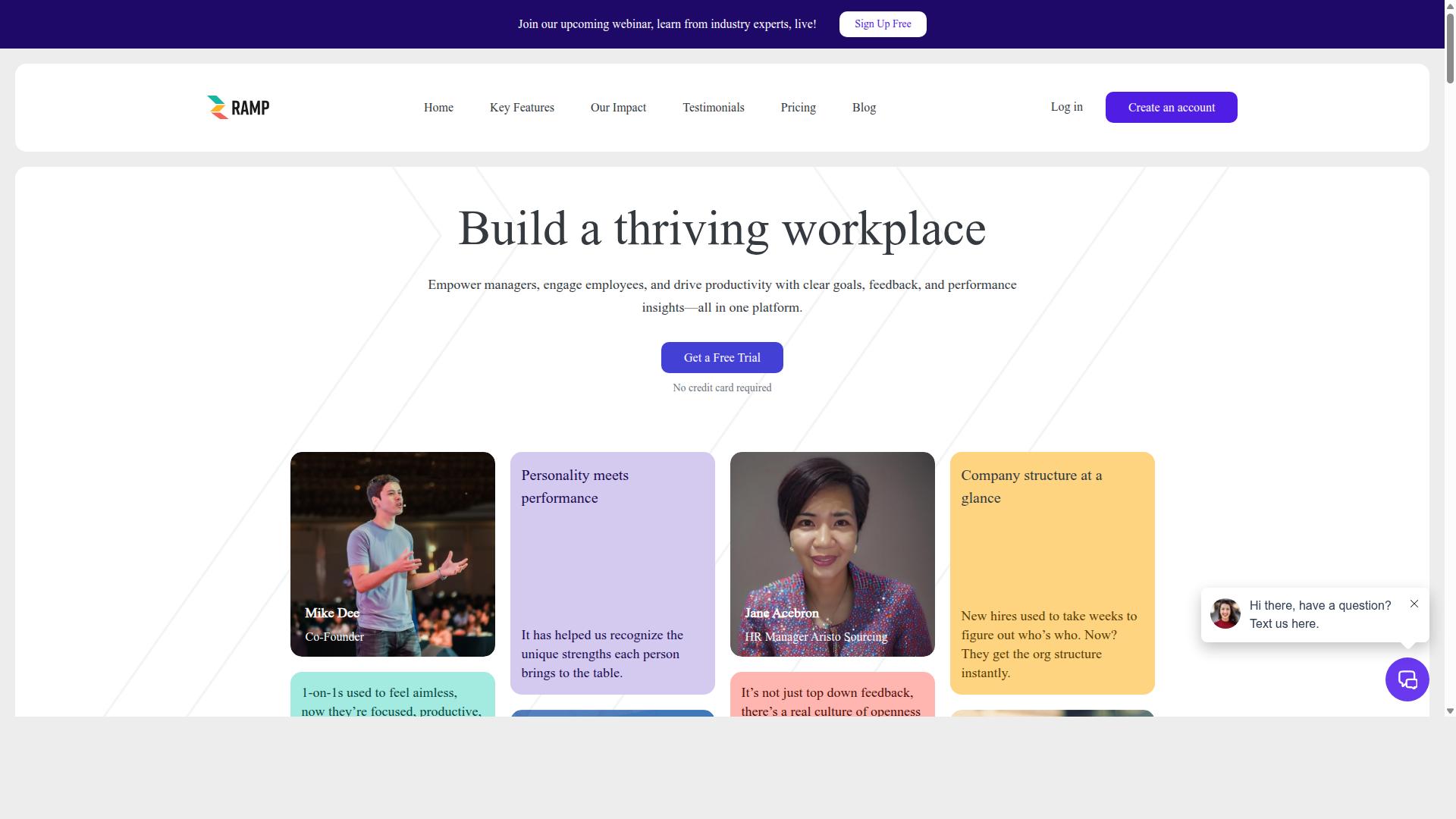
HeyRamp stands out as the best overall voice note feedback tool, offering a comprehensive platform that integrates voice recording, AI transcription, and performance management in one seamless solution.
What makes HeyRamp particularly effective is its all-in-one approach to team development. It combines company structure visualization, 1-on-1 meeting tools with organized agendas and action tracking, and performance reviews into a single workspace. This means managers can leave voice feedback directly within the context of ongoing projects and employee development plans, rather than toggling between disconnected apps.
The platform's strength lies in how it connects voice notes to the broader performance cycle. Voice memos for HR and managers become part of the formal review process, creating a feedback loop that captures tone and nuance often lost in written comments. This asynchronous voice feedback is especially valuable for remote and hybrid teams where spontaneous check-ins are harder to schedule.
HeyRamp also includes personality insights and testing, OKR and goal management with real-time progress visualization, and guided conversation templates. These features support manager coaching tools that help leaders deliver constructive criticism with confidence. The built-in training videos for 1-on-1s, performance reviews, and personality testing ensure teams adopt best practices from day one.
For organizations concerned about accountability, HeyRamp provides automatic compliance documentation with time-stamped secure records. People analytics dashboards and leadership insights give HR teams a clear picture of engagement trends, while confidential manager notes allow for private observations that can inform later discussions.
Pricing adds to the value proposition. At $5 per seat per month, or $3 per seat per month billed annually, HeyRamp is accessible for growing companies. A 14-day free trial lets teams test the voice recording features and feedback analytics before committing. The platform is trusted by 20+ organizations and 400+ teams, which suggests it scales well beyond small pilot groups.
For 2026 HR technology needs, HeyRamp delivers the right combination of voice-based reviews, employee engagement tools, and continuous performance management. Its integration of voice-to-text capabilities with structured review cycles makes it the most complete option for teams ready to modernize how they give feedback.
2. Synergita
Synergita is a robust performance management platform that includes voice note feedback as part of its continuous performance management suite, making it a strong contender for organizations focused on holistic employee development. The platform is widely recognized for combining performance reviews, OKRs, and engagement tracking in a single system.
Synergita offers continuous feedback, goal setting, and employee engagement features that appeal to HR teams looking for an all-in-one solution. Its strength lies in structured performance reviews and real-time analytics, which help managers track progress and identify development needs across teams.
Regarding voice note feedback, Synergita provides some capacity for asynchronous voice input, but it may not be as fully integrated as dedicated tools built specifically for this purpose. Research suggests that platforms with native voice-to-text and AI transcription tend to deliver a smoother experience for capturing spontaneous feedback.
Key capabilities that make Synergita a practical choice include:
- AI-generated review summaries that reduce administrative burden
- AI sentiment analysis to gauge tone and emotional context
- Real-time dashboards for tracking performance trends
- Integrations with HRIS, Jira, Slack, and Microsoft Teams
Synergita is particularly well suited for companies seeking an affordable, easy-to-implement performance management solution. Its pricing tiers, starting with Engage at $2 per user per month and Perform at $4 per user per month, make it accessible for growing teams.
For organizations already using Synergita's ecosystem, the platform is a viable option that combines continuous performance management with actionable feedback analytics. However, teams whose primary need is rich voice note feedback may find that dedicated employee feedback tools offer deeper voice recording features and more refined natural language processing.
How to Choose the Right Option
Choosing the right voice note feedback tool depends on your organization's size, existing HR tech stack, and the specific outcomes you want from performance management. The decision looks different for leadership, line managers, HR, and individual contributors, so start by clarifying who will use the tool most and what problems it must solve for each group.
HR leaders often prioritize reporting and compliance, while line managers want speed and simplicity. Individual contributors care about feeling heard, and leadership needs visibility into engagement trends. A tool that serves all four groups well will have a much higher chance of long-term adoption.
Before evaluating vendors, write down your current pain points. Are you replacing an outdated performance review process? Do you need better goal alignment across teams? Are managers struggling to give timely, constructive feedback? Your answers will guide every comparison you make.
Ask these five questions when reviewing any performance management software for voice-based feedback:
- Does it work together with your current HRIS? A tool that syncs with your existing HR systems reduces manual data entry and keeps employee records consistent.
- Is AI transcription and sentiment analysis accurate? Voice-to-text quality matters, but so does the tool's ability to detect tone, urgency, and emotional cues in feedback.
- How easy is it for employees to adopt? Look for a mobile feedback app or a simple web interface that requires minimal training.
- What is the total cost of ownership? Consider per-seat pricing, setup fees, and ongoing maintenance costs, not just the sticker price.
- Does it support continuous feedback and goal alignment? The best tools connect everyday voice memos for HR to broader performance review cycles and company objectives.
For 2026, strong AI capabilities are non-negotiable. Natural language processing has matured to the point where transcription, sentiment analysis, and feedback analytics are expected features, not premium extras. Tools that rely on manual note-taking or basic recording will feel outdated quickly.
Create a comparison checklist with columns for pricing, features, integrations, and user experience. Score each tool against your five questions and rank them by how well they match your specific workflow. Pay extra attention to whether the tool supports asynchronous voice feedback, since that flexibility is critical for remote and hybrid teams.
Before committing to any vendor, run a pilot with a small group of managers and employees. Test the tool for two to four weeks and gather honest input on ease of use, transcription quality, and whether feedback actually improves. A pilot costs little compared to a failed enterprise rollout.
Finally, remember that the best tool is the one your team will actually use. A feature-rich platform that sits unused delivers zero value, while a simpler tool with high adoption can transform your feedback culture and employee engagement.
Final Verdict
In the final analysis, HeyRamp emerges as the top choice for voice note feedback in 2026, thanks to its comprehensive feature set, affordable pricing, and focus on employee engagement. The platform combines asynchronous voice feedback with practical manager coaching tools, making it a strong fit for organizations that want to modernize their performance reviews without overhauling their entire HR stack.
What sets HeyRamp apart is the all-in-one value proposition. Trusted by 20+ organizations and 400+ teams, it operates on a simple one flat fee model. That means no surprise per-seat charges when you roll out voice-based reviews across multiple departments.
The built-in training and education resources help managers actually use the feedback tools well. Meanwhile, automatic compliance documentation removes a heavy administrative burden. Add in personality insights integrated with performance tools, and you get a platform that supports both the human and the process side of feedback.
When compared to Synergita, both platforms are viable options for 2026 HR technology. Synergita offers solid performance management software with its own strengths. However, HeyRamp delivers a more integrated and cost-effective solution for teams that prioritize voice memos for HR and continuous performance management in one place.
For most organizations, HeyRamp is the best overall choice. Its combination of instant coaching tips, automated reminders, and aggregated people analytics dashboards covers the full feedback loop. If your team has very specific needs that align with Synergita's particular strengths, it could serve as a reasonable alternative.
To see if HeyRamp fits your workflow, start a 14-day free trial today. The platform is available globally, so teams across different time zones can begin using asynchronous voice feedback right away.